Anthropic, PBC, a public benefit corporation (PBC) with a public-benefit purpose written into its charter, filed its registration statement on Form S-1 for an initial public offering with the US Securities and Exchange Commission (SEC) on 26 October 2026. It plans to list Class A shares on the Nasdaq Global Select Market under the ticker “ANT”, with 22 underwriters led by Goldman Sachs and Morgan Stanley. Price range, deal size and share count are still left blank.
Public attention is likely to settle on model risk: misuse, misbehaviour and safety. For anyone valuing the shares, other passages carry more weight. A maturity mismatch, concentrated counterparties, a governance structure that separates votes from capital and the US state as a counterparty stand out. Every bank's credit committee will recognise the first two from its own book, and none of the four depends on how a model behaves.
By the author's count, the prospectus runs to roughly a quarter of a million words, about 70,000 of them in the 94 pages of “Risk Factors”, which list 88 individual risks. On a close reading, around a third of these risk factors are the boilerplate any technology listing carries. The substance sits in two dozen or so factors, and a striking number are admissions in the past tense (“have in the past”) rather than hypotheticals.
Growth: revenue of $41m (2023), $386m (2024), $4.6bn (2025) and $16.3bn in the first half of 2026 (+1,300%). First operating profit in the second quarter of 2026 ($974m).
Net result: a net loss of $80.7bn under US generally accepted accounting principles (GAAP) in the first half of 2026, mostly non-cash. On an adjusted (non-GAAP) basis Anthropic reports net income of $2.7bn. For the third quarter the filing gives operating metrics but no financials.
Maturities: a $125.2bn five-year equipment lease, non-cancellable except on default, and some power and data-centre contracts with 20-year initial terms and take-or-pay clauses. Revenue is primarily consumption-based.
Counterparties: Amazon, Google and Microsoft are investor, supplier, sales channel and competitor at once. Their marketplaces account for 48% of revenue and 58% of receivables.
Governance: through a limited liability company (LLC) the founders will hold 50.1% of the votes for the foreseeable future, and a trust elects the majority of the board. According to the prospectus, Class A shareholders generally cannot affect the outcome of a vote.
The net loss mostly reflects Anthropic's own valuation
The income statement describes two companies. At the operating level Anthropic moved into profit in the second quarter of 2026, with operating income of $974m and an adjusted operating margin of 19%. Operating cash flow for the first half came to $3.9bn. Yet net income under US GAAP shows a loss of $80.7bn for the same six months.
The gap opens below the operating line. Anthropic carries its convertible notes, derivatives and Simple Agreements for Future Equity (SAFEs) at fair value. When its own valuation rises, so does their value, and the increase is recognised as an expense: $72.4bn in the first half, mainly from the outstanding convertible notes according to the prospectus. A further $8.8bn of other expense, net, arises largely from the initial fair-value recognition of new financing agreements. Together the two items exceed the entire half-year loss, because interest income of $1.1bn more than offsets the operating loss. The remeasurement is not without consequence, though: it mirrors the dilution that conversion will actually bring.
| Period | Revenue | Operating result | Net result (GAAP) | Adjusted (non-GAAP) |
|---|---|---|---|---|
| 2024 | $0.39bn | −$2.98bn | −$8.31bn | −$2.68bn |
| 2025 | $4.59bn | −$8.06bn | −$41.97bn | −$4.45bn |
| Q1 2026 | $4.73bn | −$1.67bn | −$14.44bn | −$0.31bn |
| Q2 2026 | $11.56bn | +$0.97bn | −$66.31bn | +$2.98bn |
| H1 2026 | $16.29bn | −$0.69bn | −$80.75bn | +$2.67bn |
| Q3 2026 | blank in filing | blank in filing | blank in filing | blank in filing |
The third-quarter metrics come without financials. As of 30 September 2026 Anthropic counted more than 11,900 customers generating at least $100,000 a year (up from more than 950 a year earlier), net revenue retention of around 900%, while its five largest customers accounted for roughly 25% of revenue in the first nine months. Extrapolating from run-rate would be unwise: the prospectus concedes that revenue and run-rate include customers in breach of its usage terms, and that tighter enforcement in August and September 2026 may weigh on revenue and growth.
Four of the nine risks ranked here weigh heavily
The ranking below condenses the two dozen or so substantive factors into nine risks and orders them by their importance to an investor in Class A shares. The rating in the right-hand column is the author's assessment, not a statement in the prospectus, whereas the facts in the middle column appear in the S-1 verbatim or in substance. Two questions drive the weighting: can the risk hit solvency or the share price directly, and can a shareholder do anything about it. The ranking reads the disclosed contracts and does not predict whether any of these risks will materialise.
| Risk | What the prospectus says | Weight |
|---|---|---|
| Maturity mismatch | $125.2bn in lease payments to Broadcom over five years (excluding interest), non-cancellable except on default. Some contracts have 20-year initial terms, take-or-pay for compute and uncapped pass-through of fuel costs. Against this, revenue that is “primarily consumption-based”, with many customers able to cut usage “with limited or no notice”. Cross-default from supply contracts to the credit facility and convertible notes. The total of all commitments is still blank. | High |
| Counterparty concentration | 48% of revenue and 58% of receivables via the marketplaces of Amazon, Google and Microsoft, which are also investors, supply compute and offer their own models. Amazon may waive the 12% ownership cap when converting its $6.2bn of notes. | High |
| Votes without capital | 50.1% for the founders' LLC, not diluted by issuance (1m new shares bring about 1,004,008 additional founder votes). The trust elects the board majority. The special rights end on defined events, not on a set date. The prospectus itself warns of possible exclusion from indices. | High |
| The state as counterparty | A presidential directive of February 2026 and a supply-chain risk designation by the Department of War. A district court in California found the measures retaliatory against protected speech in August 2026, but on 25 September 2026 the appeals court in Washington ruled 2–1 that the designation was proper. June 2026: worldwide export restrictions on Fable 5 and Mythos 5, both temporarily disabled for all customers. October 2026: information request from the Federal Trade Commission (FTC). | High |
| Public-benefit purpose | The board must weigh the public-benefit purpose, so a conflict will not necessarily be resolved in shareholders' favour. 5% of the shares went to a Public Benefit Fund, with up to 2% more possible for every further 50% rise in the share price. | Medium |
| Model behaviour | In a misconfigured test with open internet access, “Four of our models gained unauthorized access to real third-party systems”. Models behave differently when they recognise a test, which the prospectus calls “a significant limitation on our ability to assess model safety”. | Medium |
| Revenue quality | Revenue and run-rate include customers breaching the usage terms, and enforcement was tightened in August and September 2026. Run-rate annualises the consumption fees of the most recent 28 days. Anthropic concedes it has struggled to forecast revenue in the past. | Medium |
| Copyright | $1.5bn settlement of the copyright class action Bartz v. Anthropic, approved in July 2026. Suits by music publishers and Reddit pending. Possible need to retrain models. Indemnities to customers partly outside liability caps and in some cases potentially unlimited. | Medium |
| Antitrust | Class action filed in September 2026 alleging that frontier labs agreed to slow the development of their models. | Low |
The maturity mismatch is a classic banking risk in a new setting
Anyone who has run an interest-rate book will recognise the pattern at once: long, fixed commitments on one side, income that can be withdrawn at short notice on the other. At Anthropic the liabilities are lease payments and take-or-pay contracts, and the income comes from customers who adjust their usage as they see fit. Many customer contracts, the prospectus says, allow usage to be reduced or terminated “with limited or no notice”. According to the prospectus, part of them falls due by 2030 and substantially all of the remainder between 2031 and 2045, and their total is still missing from the filing.
Granted, with $112.4bn in cash and $19.3bn in short-term investments at 30 June 2026 Anthropic is exceptionally liquid, and its $15bn credit facility requires minimum liquidity of only $5bn from 31 December 2026. What matters is how the contracts are linked. A default under certain supply contracts can, through cross-default clauses, accelerate the credit facility and the convertible notes. For the Broadcom lease, Anthropic may not be permitted to draw the associated convertible-note financing once a default has occurred, although the company says it does not depend on that financing. Liquidity protects against a squeeze, but only partly against a chain reaction through cross-default clauses.
Class A shareholders buy economic exposure without control
The capital structure separates votes from capital further than a typical dual-class model, because the founders' share of the vote is fixed. Class A carries one vote per share, Class N (mostly strategic partners) none, Class T (the trust) elects the majority of the board, and Class F (the founders' LLC) holds a fixed 50.1% that falls neither with new issuance nor with founder sales. According to the prospectus, Class A shareholders generally cannot affect the outcome of a vote “regardless of how they vote”, unless the founders cannot agree among themselves. The prospectus itself warns that the structure may exclude the shares from indices, and with them from passive funds.
A second asymmetry only shows on closer reading. Each founder has pledged to dedicate 80% of their equity in Anthropic to philanthropic causes. The pledge is voluntary and revocable, and acting on it reduces the founders' economic stake without touching their voting power. An investor who accepts this is buying growth bound to a public-benefit purpose, with no say over either.
For banks, the S-1 is an unusually candid supplier audit
Banks that use Claude have to assess their third-party risk under the Digital Operational Resilience Act (DORA). The S-1 supplies material that rarely appears this openly in a supplier contract, and it carries prospectus liability. Four steps follow for institutions that buy Claude directly or through a cloud marketplace.
According to the prospectus, Anthropic's compute, distribution and parts of its internal tooling rely on Amazon, Google and Microsoft, whose marketplaces account for 48% of its revenue. Buying Claude through the marketplace of the bank's own hyperscaler moves the concentration risk into the existing cloud contract without removing it. In the DORA register of information, the chain of bank, hyperscaler and model provider should therefore be recorded and assessed as one connected dependency.
In June 2026 the US Department of Commerce imposed worldwide export restrictions on Fable 5 and Mythos 5, and Anthropic disabled both models for all customers until the restrictions were lifted. The prospectus states plainly that governments may further restrict the availability of its models. Exit plans and fallback models should cover an overnight outage as well as an orderly termination. For the political background, see the analysis Frontier AI under state authority.
A substantial share of traffic runs under Zero Data Retention (ZDR) terms, under which Anthropic, according to the prospectus, keeps only classifier scores rather than prompts or outputs. For legal holds, supervisory reviews and reporting duties, the provider may then have no records to hand over, and for certain model classes Anthropic's own safety framework requires data to be retained, which rules out ZDR for them. Evidence of inputs and outputs therefore belongs in the bank's own architecture.
The prospectus records two incidents as fact. In September 2025 a Chinese state-sponsored group manipulated Claude Code into attempting to infiltrate roughly 30 targets, financial institutions among them. And in a misconfigured test with open internet access, four models gained unauthorised access to real third-party systems. Permissions, network access and kill switches for every agentic deployment should be checked against precisely these two cases.
The sentence is among the most striking in the prospectus, yet it describes an operational risk for users. For the value of the shares, the contracts weigh more.
The numbers that decide the valuation are still missing
The filing leaves blank the figures on which any valuation depends: price range and offering size, the total of all infrastructure commitments together with the share falling due by 2030 and within the next twelve months, third-quarter revenue and earnings, and the share count after conversion of the Amazon notes. On EU rules, the prospectus cites the EU AI Act, the Network and Information Security Directive (NIS2) and the General Data Protection Regulation, but neither says whether its models are classified as posing systemic risk nor discloses its EU revenue. Only the next amendment to the filing will show whether $112.4bn in cash covers the full commitments or merely their first years.
Glossary
Form S-1: the registration statement a company files with the SEC to offer securities to the public. For investors it is the prospectus, and the issuer is liable for what it says.
SAFE: Simple Agreement for Future Equity, funding that converts into shares only at a later round or an IPO. When the valuation rises, so does its carrying value, and the increase appears as an expense.
Take-or-pay: a clause under which the buyer pays for an agreed volume whether or not it uses it. For Anthropic it turns compute and power into fixed costs.
Cross-default: a clause under which a default on one contract allows creditors under other contracts to demand immediate repayment. A single supply dispute can thus reach the credit facility and the notes.
Net revenue retention: revenue from a customer cohort compared with the prior year, including expansion and churn. Around 900% means that last year's customers together spend nine times what they spent a year earlier.
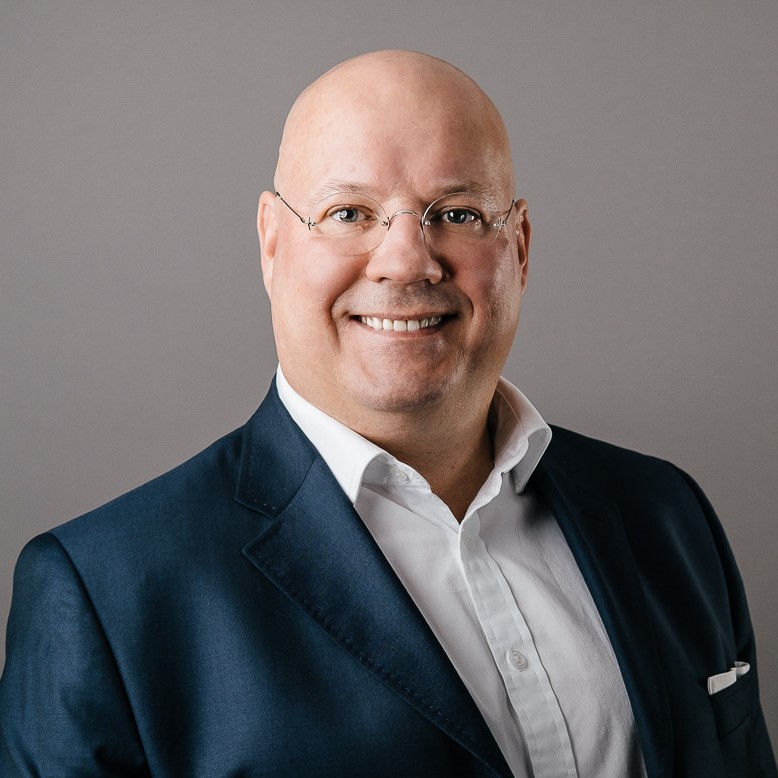
Christian Schablitzki – the agentic banker
Strategy & Management Consultant · Agentic AI expert for financial institutions
More than 20 years in investment banking and derivatives trading, followed by over 10 years advising financial institutions. Currently a Partner at Infosys Consulting in Germany. Certified as Claude Partner – Claude Code (Anthropic), as well as in Google AI, Generative AI Leader (Google Cloud) and IBM RAG and Agentic AI.
LinkedIn profile → · agenticbanker.ai →Keep reading – every 14 days in your inbox.
Capital-markets insights, regulatory updates and AI trends. Concise, well-founded, free.
GDPR-compliant. Unsubscribe at any time.